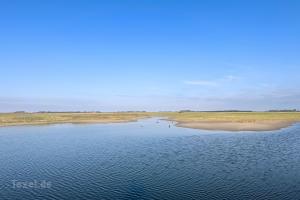
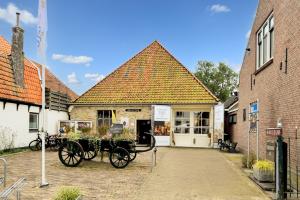
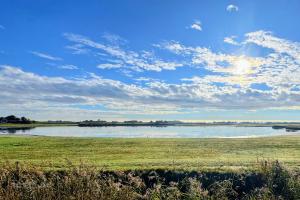
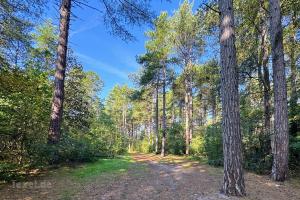
On an island barely twenty kilometres long lie seven villages that bear almost no resemblance to one another, from a bustling seaside resort to a hamlet of five hundred souls.
Seven villages, seven characters
Texel is the largest of the Wadden Islands, and it was precisely that size which allowed seven separate villages to develop.
Everything within half an hour: it takes about twenty minutes to drive from the southernmost village to the northernmost. By bike, a little under an hour.
From busy to silent:De Koog has more beds than residents in summer, while in De Waal you may not meet a soul.
Each village with its own role:Den Burg is the shopping hub, Oudeschild the fishing harbour, De Koog the seaside resort, and the rest have remained farming and residential villages.
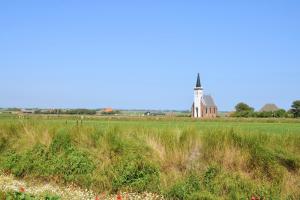
Recognisable by the church tower: across the flat polder land you can see the village towers from kilometres away. They once served as landmarks for farmers and skippers alike.
Take in all of them: it is precisely the differences that make all seven worth visiting. By bike you can pass them all in a single day.
De Koog
The island's seaside resort, and for many visitors the very reason they came to Texel.
The beach round the corner:De Koog lies directly behind the dunes, with post 17 and post 20 within walking distance. Its broad sandy beach is the busiest on the island.
Going out and shopping: the Dorpsstraat has dozens of cafés, restaurants, ice cream parlours and shops. In high season this is the only place on Texel where you genuinely go out at night.
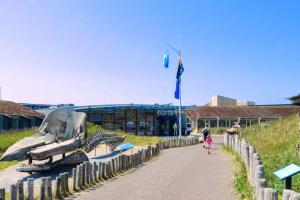
Seeing seals: on the edge of the village sits Ecomare, the nature museum and rescue centre for seals and birds. It is always packed at feeding time.
Worth knowing: this is the village with the most hotels, campsites and holiday parks, but also the highest prices and the biggest crowds in July and August.
Den Burg
The largest settlement on Texel and the village where the islanders do their own shopping.
The shopping hub:Den Burg has the only real shopping streets on the island, with supermarkets, clothing shops, bookshops and specialist stores around the Groeneplaats.
Market on Mondays: in summer there is a weekly market on the Groeneplaats, selling regional produce, Texel cheese and lamb.
Right in the middle: Den Burg sits exactly at the island's centre, putting every point on Texel within a quarter of an hour. Handy as a base.
The oldest core: the village grew up around a ring fortress, to which its name still refers. The outline of that fortress is still visible in the street pattern.
Terraces and food: most of the village's restaurants and cafés sit around the Groeneplaats, welcome after a day in the saddle.
Oudeschild
The only true harbour on Texel, and the village that has best preserved the island's maritime past.
The fishing fleet: the cutters of the Texel fleet lie in the harbour at Oudeschild. Watch them come in and that same catch will be on the table that evening in the harbourside restaurants.
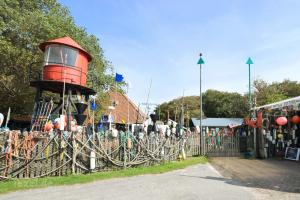
The beachcombers' museum:Juttersmuseum Flora displays what has washed up on the beach over the centuries, from ships' cargo to sheer curiosities. One of the most idiosyncratic museums in the Netherlands.
The Roads of Texel: for centuries the anchorage off this coast was where VOC fleets took on their final supplies before sailing for Asia. Shipwrecks still lie on the seabed.
Straight off the boat: the fish restaurants along the harbour serve whatever came in that day. Book ahead in season.
The mill: on the edge of the village stands the corn mill Het Noorden, open to visitors on milling days.
Den Hoorn
The first village you see after arriving by ferry, and by many accounts the best preserved on the island.
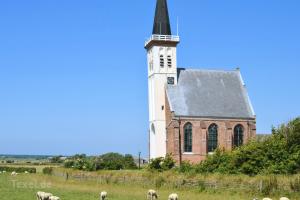
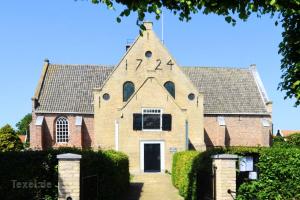
The white church: the slender white tower of Den Hoorn, dating from 1425, is visible from the water and counts as one of the finest on the Wadden Islands.
A protected village scene: the old core, with its sheep barns and small white houses, is protected as a whole, which is why the view has barely changed.
Bulb fields in spring: the fields around the village turn Texel into a blaze of colour in April and May. The annual flower festival draws visitors from the mainland.
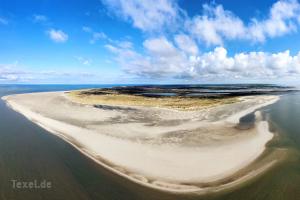
On to De Hors: from Den Hoorn you cycle straight to De Hors, the vast sand flat at the southern tip, and to the Mokbaai.
Close to the ferry: the village lies about five minutes' drive from the ferry terminal at 't Horntje, making it a practical last stop.
De Cocksdorp
The youngest and most northerly village on Texel, with the lighthouse for a neighbour.
Founded only in 1836:De Cocksdorp came into being after the Eierland polder was reclaimed. That explains its straight streets and orderly layout, unlike the winding older villages.
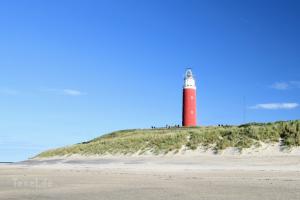
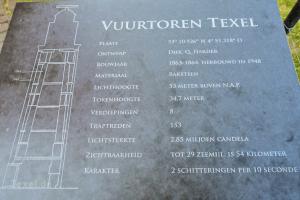
The red lighthouse: the Eierland lighthouse stands at the island's northernmost point and can be climbed. On a clear day you can see Vlieland from the top.
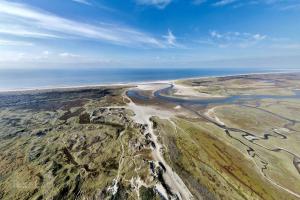
Where two seas meet: off this coast the Wadden Sea and the North Sea come together, producing a striking display of currents and sandbanks.
Nature all around:Roggesloot and the Krimbos lie close by, both favourites with birdwatchers.
Dark skies: with no street lighting around the village, this is one of the best places in the Netherlands for stargazing.
Oosterend
For many islanders and visitors alike, the loveliest village on Texel.
Narrow lanes:Oosterend has a core of tight, winding alleys lined with white and black cottages, best explored on foot.
The oldest church: the Maartenskerk dates in its core to the eleventh century, making it the oldest building on Texel.
Four churches in one village: remarkable for so small a place. Oosterend was known as the most devout village on the island, with several denominations side by side.
A fishing past: the village once stood on open water and had its own fishing fleet, until land reclamation put an end to it.
The smallest village on Texel, and for that very reason the quietest.
Fewer than five hundred residents:De Waal amounts to little more than one street of old houses, a church and a mill.
Deep in the polder: the village sits in the green heart of the island, surrounded by meadows full of Texel sheep.
The cultural history museum: here you will find the collection on everyday life on Texel through the centuries, including a display of old sledges.
Waalenburg nature reserve: close to the village lies Waalenburg, one of the most important meadow bird areas on the island.
Nothing much at all: if you are after silence, this is the place. There are hardly any facilities, and that is precisely the point.
Visiting all seven
A circuit of all seven is entirely doable and shows you a very different Texel from the beach alone.
By bike: a route taking in all seven villages comes to around 45 kilometres. On an e-bike or at a leisurely pace that fills a day. See our page on cycling.
By car: two to three hours will get you round, short stops included. The roads are narrow, so expect cyclists.
By bus: the Texelhopper links all the villages to one another and to the ferry terminal. Outside timetabled hours you can book it in advance.
The finest route: avoid the through roads and take the narrow polder lanes between the villages instead, past De Dennen and the sheep barns.
When to come: in spring the bulb fields are in colour and the lambs are out in the meadows. In July and August De Koog is busy, but the other six villages stay quiet.
Where to stay: each village has its own offering, from campsites around De Koog to bed and breakfasts in the smaller settlements.